It is not simply about physics. Steel has much better heat conduction properties than wood; it transfers heat hundreds of times faster than wood. Bare metal panels will begin to "sweat" as soon as they come in contact with moist air. So, the best way to insulate a metal building is to consider heat transfer, air leakage and condensation at the same time.
In this article, we will provide an overview of the types of materials that constitute metal building insulation. We will also compare spray-foam and batt insulation side-by-side, discussing why many professional builders today prefer using closed-cell spray foam for their shops, pole barn builds, warehouses, and barndominium projects.
Key Takeaways
- For most heated or cooled buildings, closed cell spray foam is the best way to insulate a metal building. It combines a high R value (about R-6.5 to R-7 per inch), an air barrier, and moisture control in one application.
- Proper insulation in a metal building has to handle condensation control, not just temperature. R value alone won't stop a roof from dripping.
- Fiberglass batts, rigid foam board, and double bubble insulation all have their place, but none of them control air and moisture as well as spray foam insulation.
- Contractors like closed cell foam because it goes on fast, sticks directly to the metal skin, and holds up for decades.
- As demand grows, owning a spray foam business, such as a Liquid Green Franchise, is an attractive option for contractors and first-time business owners.
What Is Metal Building Insulation?
Metal building insulation is any insulation system used in a steel or pole-frame building to slow heat flow, control air movement, and manage moisture on the interior side of the metal skin. When it’s done correctly, metal building insulation:
- Keeps the indoor temperature steady year-round
- Reduces the risk of condensation
- Improves overall energy efficiency
- Dampens the noise from rain and hail
- Makes the working environment much more comfortable
The most important word here is "system". Good insulation in a metal building typically involves using both thermal resistance (R value) as well as an air barrier and vapor control.
Using unfaced fiberglass stuffed between the girts alone will rarely be effective. Instead, your primary goal should be preventing warm and humid air from coming into contact with cold steel, since this is how you can stop condensation before it occurs.
Why Metal Buildings Need Insulation More Than Other Structures
A wood-framed house has wall cavities, sheathing, and lumber that slow heat down naturally. A steel building has thin metal panels that act a lot like a radiator, passing heat straight through to the outdoors. The roof usually takes the worst of it, since roof panels face the sun all day and lose heat fastest at night.
Then there's thermal bridging. The steel frame itself, including red iron, purlins, and girts, carries heat right past any blanket insulation that isn't continuous. That's why insulation that bonds directly to the metal, or forms continuous insulation over the metal framing, delivers much better thermal performance in real life.
Condensation is the other big headache. When moist air inside the building hits cold roof panels and wall panels, the water vapor in that air turns to liquid right on the steel. Without proper insulation, building owners usually see some of this:
- Water dripping from the roof on cold mornings
- Sweating beams, plus rust on red iron framing and fasteners
- Mold on interior walls and on whatever you're storing
- An HVAC system that never seems to shut off
- Tools, vehicles, and inventory wearing out faster than they should
Bare metal is loud too, so insulation also helps with sound. And energy codes keep tightening. The 2021 and 2024 editions of the International Energy Conservation Code (IECC) push for higher R value and tighter building envelopes than older codes did.
Common Types of Metal Building Insulation
There's no single insulation product called "metal building insulation." Instead, you're choosing between several materials:
Spray foam insulation (especially closed cell).
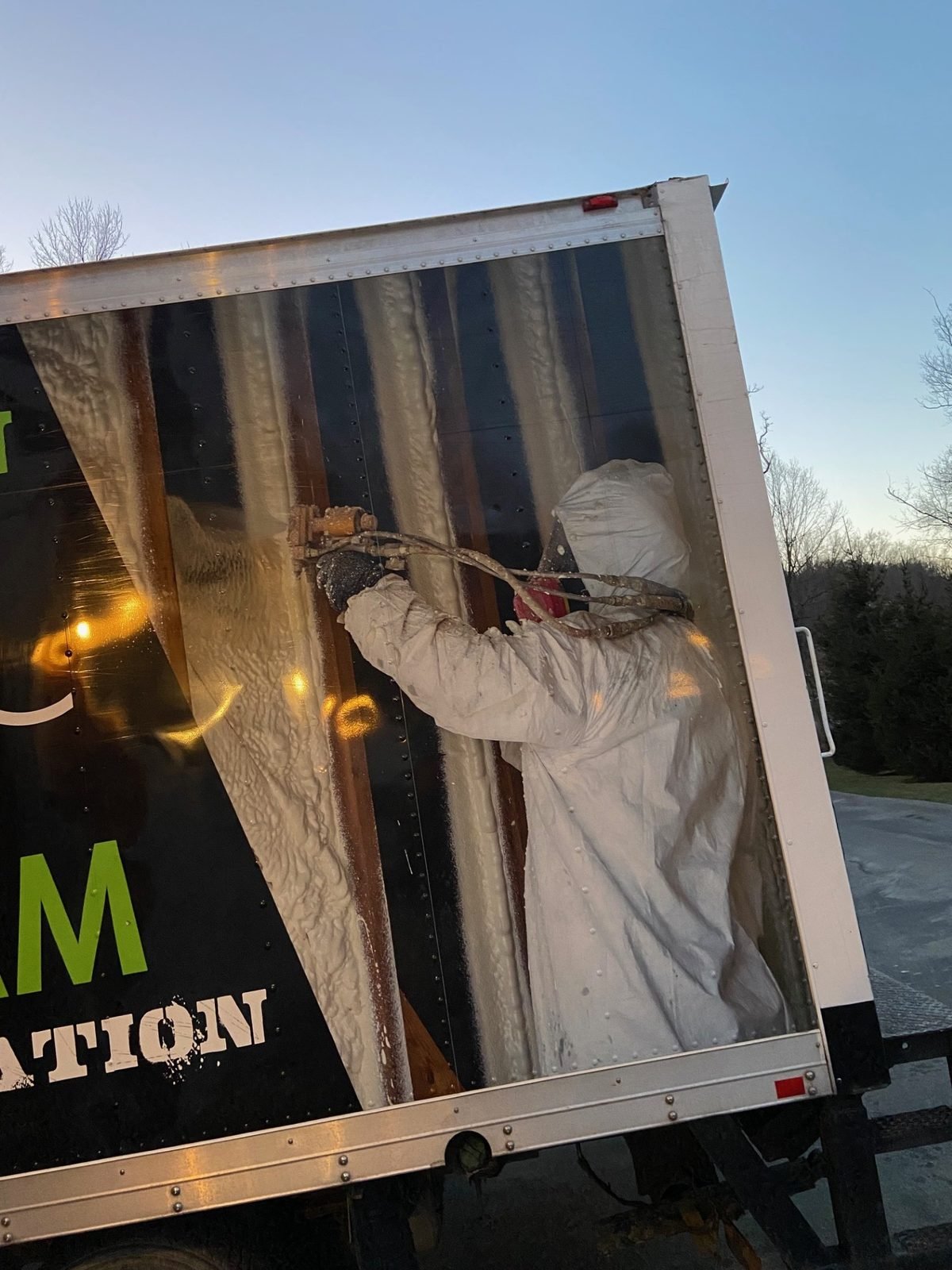
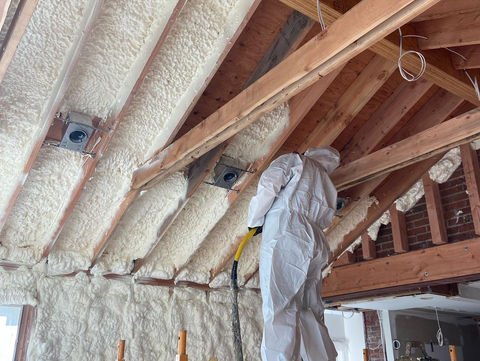
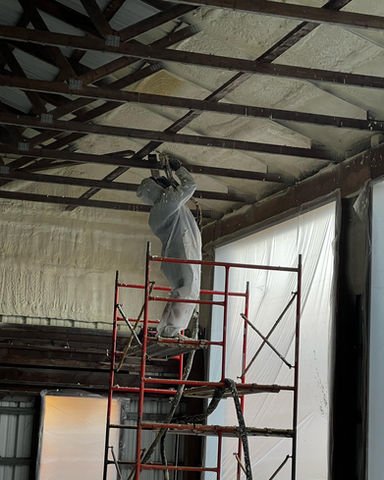
Sprayed directly onto the metal panels and framing, the foam expands to seal gaps, delivers a high R value per inch, and forms an air barrier. At around 2 inches, closed cell foam also works as a vapor retarder. Many people call it a vapor barrier, though technically it's a Class II vapor retarder.
Fiberglass insulation (batts, blankets, and metal building insulation rolls).
The long-time budget choice, installed between girts and purlins. It needs a facing or separate vapor retarder, plus careful sealing of air leaks, to control condensation.
Rigid board insulation (rigid foam board such as polyiso, XPS, or EPS).
Foam board installed as a continuous layer over the framing or inside the walls to cut thermal bridging. Rigid foam runs roughly R-3.6 to R-6.5 per inch, depending on the type, and is handy for upgrading older buildings without removing the metal siding.
Double bubble and radiant barrier products.
Reflective foil materials that reflect radiant heat away from the building. With taped seams, they can help with condensation, but double bubble on its own offers very little R value (around R-1). Higher rated values only apply when it's installed with an air gap.
Insulated metal panels.
Factory-made panels with a foam insulation core, used mostly on higher-end commercial projects.
Spray Foam vs. Batt Insulation
This is the comparison most building owners care about. Here's how closed-cell spray foam stacks up against fiberglass batts.
| Factor | Closed Cell Spray Foam | Fiberglass Batts / Blankets |
|---|---|---|
| R value per inch | R-6.5 to R-7 | About R-3 to R-4 |
| Air barrier | Yes, built in | No, needs separate sealing |
| Vapor control | Class II vapor retarder at about 2" (varies by product) | Only with a facing or separate vapor retarder |
| Condensation risk | Very low, since foam bonds to the metal and removes cold surfaces | High if there are gaps or the batts get wet |
| Typical installed cost | About $3 to $5 per sq ft (2 to 3 inches) | About $0.30 to $1.50 per sq ft |
| Best for | Heated or cooled shops, barns, commercial buildings, retrofits | New construction, mild climates, unheated storage |
| Lifespan | Decades; won't sag or settle | Can last decades if kept dry, but often breaks down sooner in metal buildings from moisture and sagging |
Open cell foam is a third option. It's cheaper (roughly $1 to $4.25 per square foot depending on thickness) at about R-3.5 to R-3.8 per inch, but it's vapor permeable. That makes it a poor fit for most metal buildings in cold or humid climates.
Pros and Cons of Spray Foam Insulation
What's good about it:
- High R value per inch means a thin layer does the work of much thicker fiberglass insulation
- Seals the gaps around girts, purlins, and penetrations that batts can't reach
- Keeps water vapor away from the interior side of metal panels, which is the key to controlling condensation
- Sticks directly to the steel, so it won't sag, settle, or slide over time
- Stiffens thin roof panels and side walls, which cuts vibration and "oil-canning"
What to watch for:
- Higher upfront cost, about $3 to $5 per square foot installed
- It has to be installed by trained professionals with the right equipment
- In occupied spaces, local codes may require a thermal barrier or ignition barrier over the foam, such as drywall or an intumescent coating
Pros and Cons of Batt Insulation
What's good about it:
- It's the most common and most affordable option out there
- Easy to find in standard sizes like R-19, R-25, and R-30 blankets
- A handy owner can install it in a small shop or storage shed
Where it falls short in metal buildings:
- Gaps and compression can cut real-world R value by 20 to 50 percent
- It tends to sag over time, especially overhead
- It loses much of its insulating power once it gets wet, and in metal buildings, moisture is almost a given without airtight detailing
- It needs an intact facing or separate vapor retarder, plus careful sealing at every seam
Which Is the Best Way to Insulate a Metal Building?
For most heated and cooled buildings, closed cell spray foam is the best insulation. It handles heat, air, and moisture in one step. It's just that effective at controlling condensation season after season.
That said, the right choice depends on how you use the building:
- Unheated storage shed or metal garage: Fiberglass batts with a good vapor retarder, or double bubble on the roof to cut radiant heat. Affordable and good enough when comfort isn't a priority.
- Heated workshop: Closed-cell spray foam on the roof at minimum, ideally the walls too. This is where condensation and wasted energy hit hardest.
- Barndominium: Closed-cell spray foam throughout to meet residential codes and stay comfortable year-round. In cold climates, rigid foam on the exterior side adds extra continuous insulation.
- Light commercial warehouse: A hybrid system. Use spray foam on the roof and upper exterior walls, then rigid foam or fiberglass lower down to manage cost. Some builders even use two layers, foam plus batts, to reach a higher R value.
Our advice: don't just compare price per square foot on install day. Look at what the building will cost you over 10 to 20 years in energy, repairs, and damage. That's where spray foam pulls ahead.
Why Construction Contractors Prefer Spray Foam
More builders, metal building erectors, and HVAC contractors are choosing spray foam for steel buildings these days. Here's why:
- One pass does it all. Closed-cell foam provides insulation, an air barrier, and vapor control in a single application. Fewer trades on site, fewer steps to schedule.
- It solves condensation at the source. Because the foam bonds directly to the metal skin, there are no cold spots. The dew point ends up inside the foam instead of on the steel, so moisture never collects on the metal.
- It fits any shape. Foam fills around girts, bracing, skylights, and overhead door tracks. No cutting, fitting, or taping like fiberglass batts require.
- It protects the structure. Stopping condensation keeps red iron, purlins, and fasteners from rusting for decades.
- Fewer callbacks. Contractors get more predictable results and happier customers, whether the job is agricultural, commercial, or residential.
Owners notice the difference too. Many commercial retrofits report energy savings in the range of 30 to 50 percent, though results depend on the building, climate, and use.
How Much Foam Is Enough?
Quality closed-cell foams are rated around R-6.5 to R-7 per inch. In a Climate Zone 5 metal shop, 2 inches on the walls (about R-13) and 3 inches on the roof (about R-20) is a common starting point. Treat that as a baseline, not a guarantee of code compliance. Commercial energy codes often require more, so check your local requirements.
Where Contractors Use It
- Metal shops and auto bays, where condensation damages tools, lifts, and vehicles
- Pole barn and post-frame buildings, where spraying foam onto the panels between posts is often faster than detailing fiberglass or double bubble perfectly
- Barndominiums, which have to meet residential energy codes
- Warehouses and cold-storage areas, where steady temperature and humidity protect what's inside
- Horse barns and poultry houses, where animals put out lots of moisture that would otherwise condense on bare steel
Installation Tips Worth Following
- Start at the top. Insulate the roof and upper walls first, since that's where heat loss and condensation are worst.
- Seal every penetration. Overhead doors, skylights, conduit, and pipes are the most common trouble spots.
- Plan for ventilation. A tight building still needs fresh air, so use exhaust fans, HRVs, or ERVs instead of counting on air leaks.
- Vet your installer. A good spray foam contractor controls the thickness of each pass and documents coverage and R value.